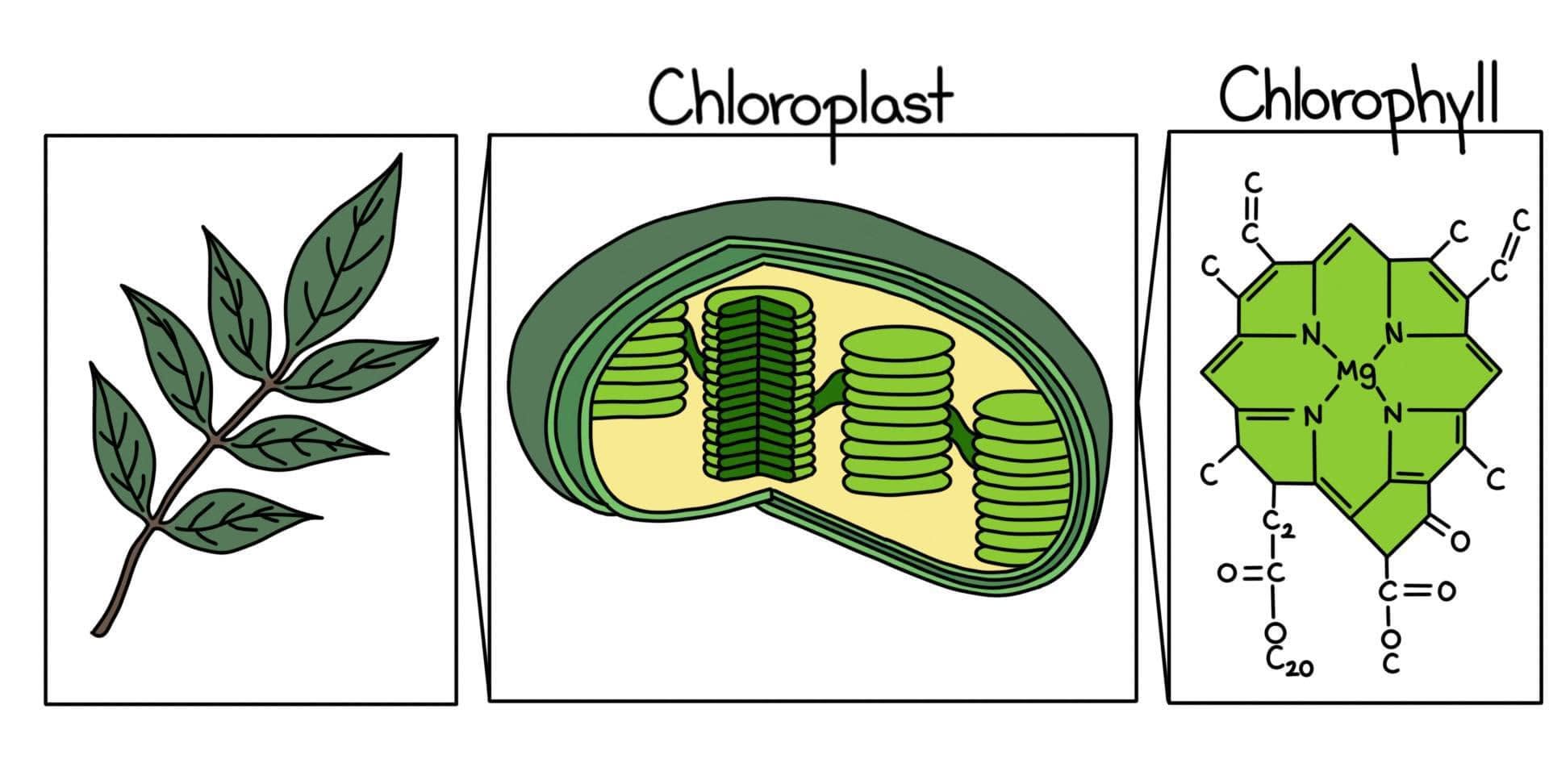
➀ What is Chlorophyll?
⌲ Chlorophyll is the green pigment found mainly in the leaves of plants. It can also be found in other parts of plants, such as stems, flowers, and fruits. Chlorophyll is also present in all types of algae.
➁ Why is Chlorophyll Important to Plants?
⌲ Chlorophyll plays an important role in photosynthesis, the process by which plants produce their own food using sunlight, water, and carbon dioxide.
Chlorophyll absorbs energy from sunlight and uses this energy to help convert water and carbon dioxide into glucose, a type of sugar that plants use as an energy source for growth and for developing different parts of the plant.
➂ What Happens When Plants Lack Chlorophyll?
⌲ Plants become less efficient at photosynthesis.
⌲ Plant growth slows down.
⌲ Leaves may begin to turn yellow and eventually fall off.
⌲ If the condition is severe and left untreated, the plant may become weak and eventually die.
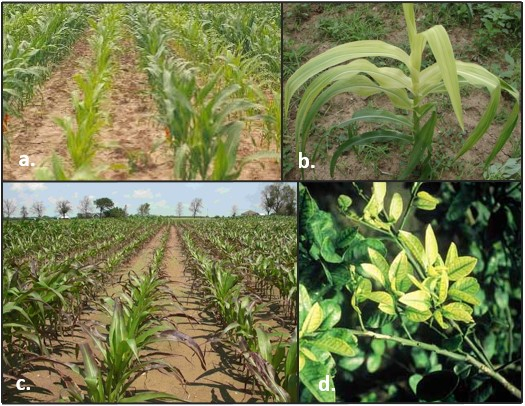
Example of a plant showing symptoms of chlorophyll deficiency
🌱 Nutrients Involved in Chlorophyll Production
Magnesium (Mg) is an essential element located at the center of the chlorophyll molecule. Other elements, such as nitrogen (N), oxygen (O), and carbon (C), are also important components of its structure.
When a plant lacks magnesium, chlorophyll production may be reduced, causing the leaves to lose their green color or develop yellowing symptoms.
Providing magnesium and nitrogen in appropriate amounts helps plants produce chlorophyll effectively and maintain healthy, green leaves.
However, plants need more than just Mg and N. They require a range of essential nutrients for healthy growth and development. Therefore, plants should receive balanced and consistent nutrition to support continuous growth and maintain overall plant health.